The scale cannot tell the difference between fat, muscle, and water. For Indian women with PCOS, thyroid issues, or insulin resistance, it does not just miss the point. It actively hides your progress. Here is what to track instead.
The number on the scale cannot tell the difference between muscle, fat, water, or glycogen. For Indian women especially those with PCOS, thyroid issues, or insulin resistance it does not just miss the point. It actively hides your progress. This article explains what the scale is actually measuring, why it is making your weight loss harder, and what to track instead.
It is 6am. You have not eaten. You step on the scale and the number is up from yesterday.
Your mood shifts. The plans feel smaller. You ate well yesterday. How is this even possible?
By evening, you are looking up crash diets. By the weekend, you are questioning everything.
This pattern is almost universal among Indian women trying to lose weight. And the cruel part? The scale did not even give you accurate information. It gave you one number, total body weight, and let you draw every conclusion from it.
The weighing scale measures total weight. That is it. It cannot distinguish between:
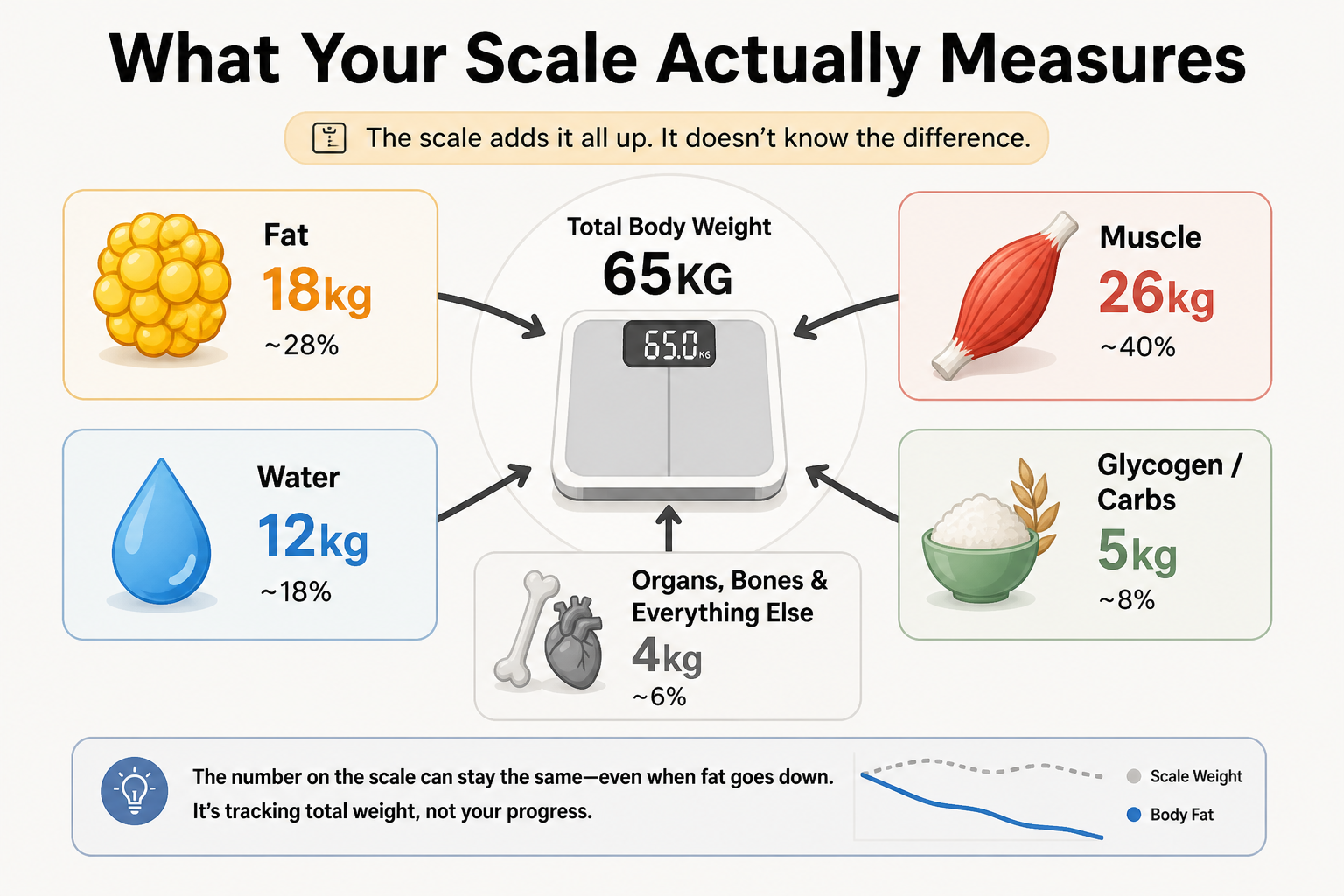
A woman on a solid weight loss program eating right, exercising, losing fat can actually gain weight on the scale while getting visibly leaner. Why? Muscle is denser than fat. If you lose 2kg of fat and gain 2.5kg of muscle, the scale says you have gained weight. But you are actually healthier, stronger, and your metabolism is better.
This alone should disqualify the scale as your primary metric.
And it gets more complicated. In the days before your period, your body routinely holds 1 to 3kg of extra water, up to 5kg for women with PCOS. That is basic hormonal biology, but the scale calls it failure.
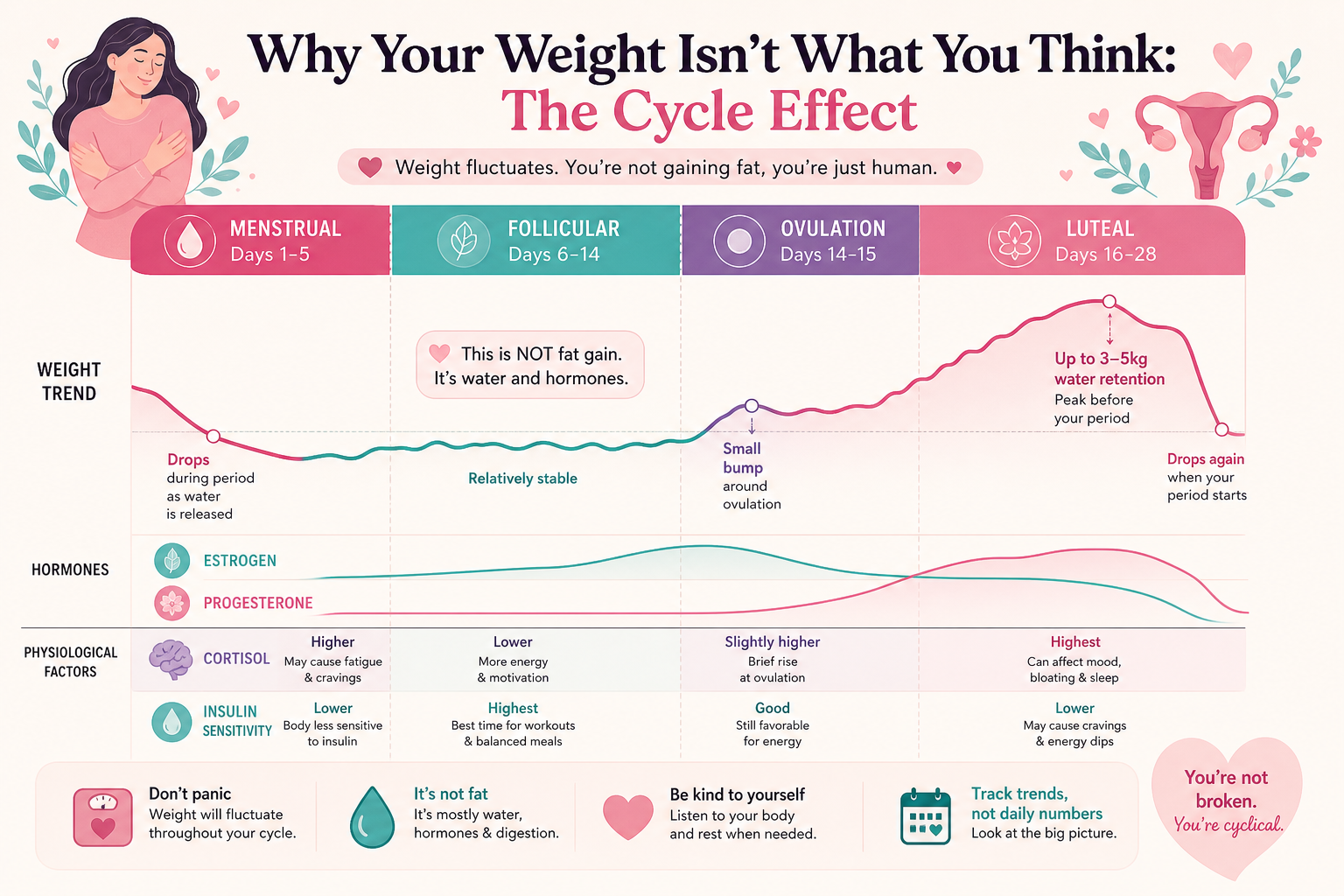
Then factor in the conditions that affect a large proportion of Indian women: PCOS disrupts insulin function, so your body stores fat more aggressively and loses it more slowly than average. Hypothyroidism slows your metabolic rate, making weight loss genuinely harder even on a restricted diet. And the anxiety of watching the scale every morning? That is cortisol which tells your body to hold onto belly fat and slow your metabolism further. Scale obsession does not just measure weight. It creates the conditions for gaining it.
If the scale is useless, what actually works? Here is what matters:
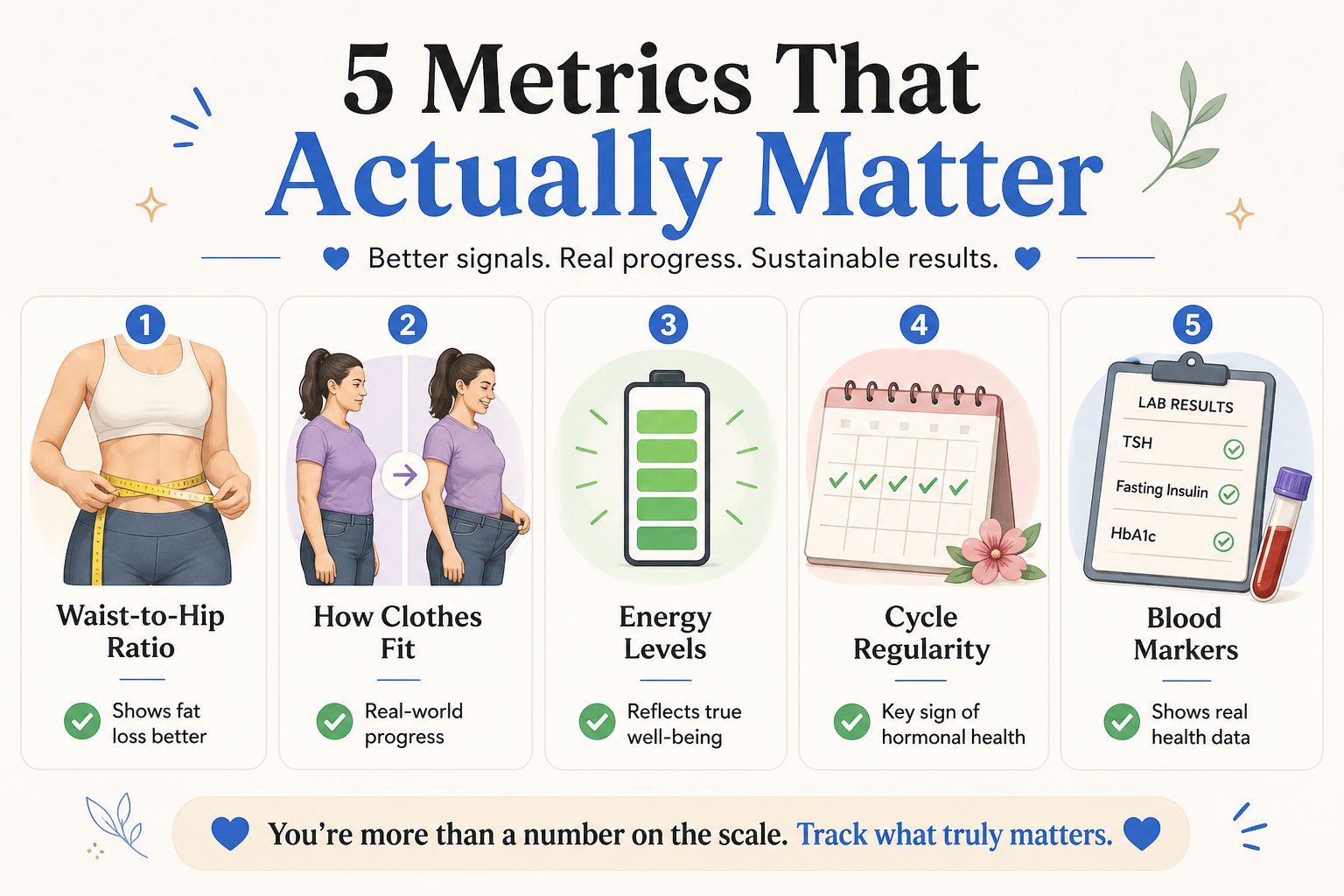
Instead of total weight, measure your waist at its narrowest point and your hips at their fullest. Divide waist by hip. For women, a ratio below 0.85 is considered healthy.
Better yet: just measure your waist alone. Losing even 1 inch from your waist while your weight stays the same means you have lost belly fat and likely gained muscle.
Waist-to-hip ratio matters because where you carry weight is metabolically important. Belly fat is more dangerous for insulin sensitivity and cardiovascular health than fat elsewhere.
This is embarrassingly simple and absurdly reliable. A pair of jeans that was tight? Now they fit. Your favorite top has space at the sides. Buttons that strained now lie flat.
This tells you, viscerally and honestly, that you are getting leaner. And you cannot fake it. Clothes do not lie.
Track how you feel. More energy throughout the day? Better sleep at night? Fewer energy crashes after meals? These mean your metabolism and blood sugar are stabilizing. They are signs of real health change that happen before the scale shifts.
If you menstruate, your cycle is a health barometer. Irregular periods, heavy bleeding, or extreme PMS often point to hormonal issues like PCOS or thyroid problems. A cycle that becomes more regular? That is your hormones healing. That is a bigger health win than any scale number.
Get tested:
These blood markers tell you what is actually happening in your body. The scale tells you nothing.
Here is what separates women who lose weight and keep it off from women who cycle through diets:
The successful ones get diagnosed.
If you have PCOS, you get metformin or inositol to improve insulin sensitivity. Weight loss becomes possible again.
If you have hypothyroidism, you get thyroid medication. Suddenly you have the metabolic capacity to lose weight.
If you have high cortisol from stress, you address the stress. The scale moves.
A gynaecologist who understands hormonal health does not tell you to eat less and move more. A gynaecologist tells you: let us find out what is broken, fix it, and then your body will respond to the right diet and exercise.
That is the diagnosis-first approach. And it works because it is treating you, not just a number.
Here is what happens when you stop obsessing over the scale:
You lose weight.
Not immediately. But steadily, sustainably, in a way that sticks.
Because you have shifted from chasing a number to chasing health. You have built real habits eating the foods that make you feel good, moving in ways you enjoy, managing stress, getting your hormones tested and treated.
The scale was never the goal. Health was. And when you measure health properly with energy, with how your clothes fit, with cycle regularity, with blood markers the weight loss follows naturally.
You lose weight for the last time because you stopped trying to lose weight and started trying to get well.
If you have been struggling with weight loss trying everything, seeing no results despite real effort do not keep blaming yourself. The issue might not be you. It might be PCOS. It might be your thyroid. It might be insulin resistance or cortisol dysregulation or a dozen other things the scale will never show.
Get tested. Get diagnosed. Get treated.
At Shakti, our gynaecologists specialize in exactly this: understanding the hormonal root of your weight struggles and creating a real plan. Not a diet. A diagnosis-first approach that actually works.
Get your free weight assessment with a Shakti gynaecologist
Your scale does not know you. But we do.
You've read the article. Your body already knows something is off. The next step is finding out what - with a doctor who actually specialises in this."
★★★★★ 4.8/5 rated | 100% Private |Trusted by Women at All Stages
.png)

.webp)