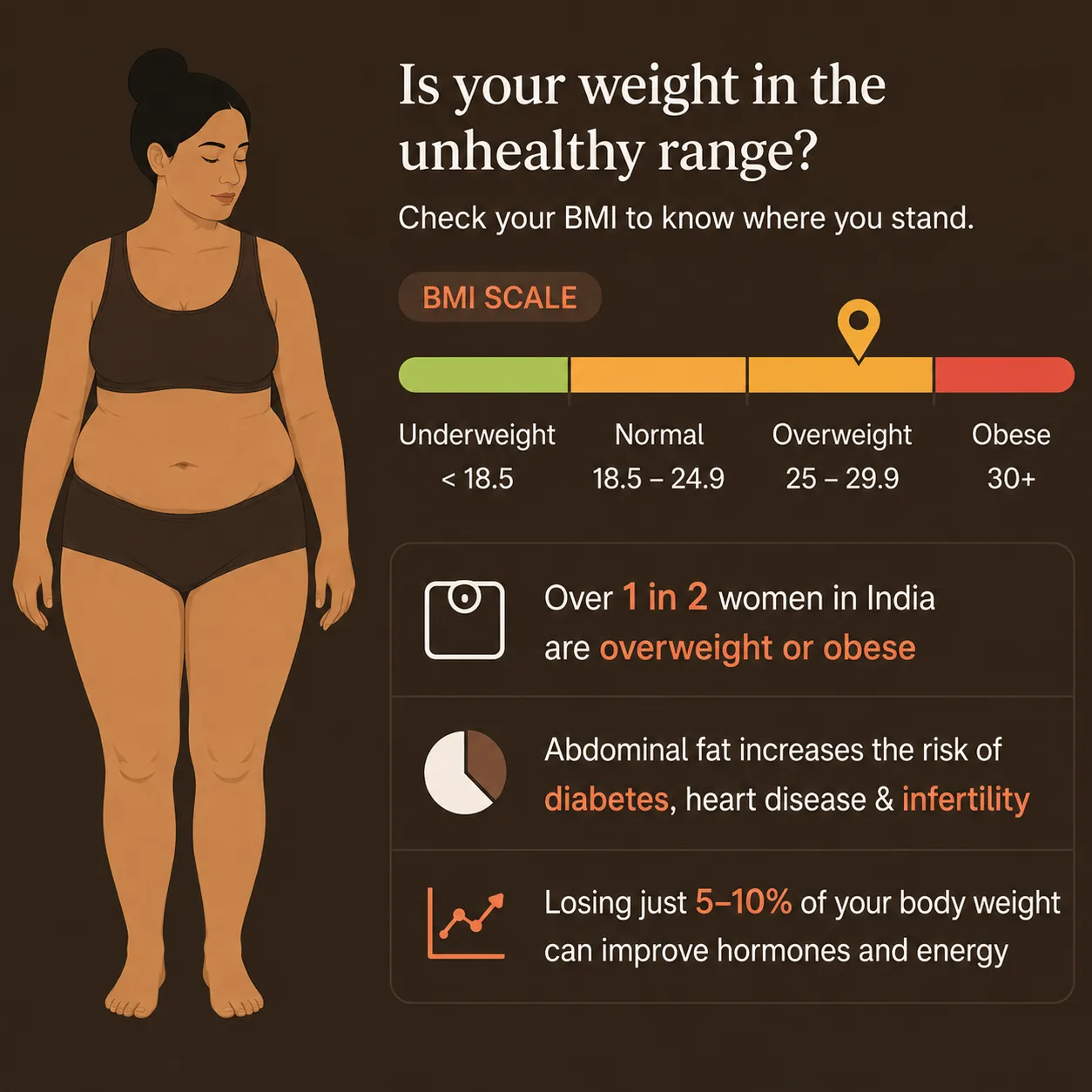
Your doctor recommends the right path - GLP-1, Medicine, or Ayurveda.

.webp)
.webp)
Why your weight isn't always about food and exercise



Women on the program see results beyond the weighing scale.
Your diagnosis, plan and treatment — all within your first week

Up to 10% body weight lost in the first 4 months
97% of a studied patient group lost significant weight

Change the current section to the following questions & answers:


Yes — for many women, it's the primary driver. Conditions like PCOS, thyroid imbalance, and insulin resistance change how your body stores fat and regulates hunger, regardless of how carefully you eat or exercise. That's why generic diet plans often fail — they're solving the wrong problem.
The clearest signs are: weight that resists diet and exercise, irregular periods, constant fatigue, or sudden changes after pregnancy, stopping birth control, or entering your late 30s/40s. A gynaecologist consultation is the most reliable way to know for certain — testing your actual hormone levels, not guessing from symptoms alone.
Your gynaecologist will recommend the right tests based on your symptoms and history during your consultation — this could include hormone panels, thyroid tests, or metabolic markers. Nothing is assumed; your treatment plan is built on your actual results.
Yes, that's common — PCOS, insulin resistance, and thyroid issues often overlap. This is exactly why a proper diagnosis matters more than a generic plan: your doctor identifies everything contributing to your weight, not just the most obvious symptom.
Often, yes. Since these symptoms frequently share the same hormonal root causes as weight gain, many women see improvement across multiple symptoms — not just the number on the scale — once the underlying cause is treated.
.png)

.webp)


.webp)